

The Access KPI Misalignment: Tracking What Looks Good vs. What Moves the Needle
In today’s pharma landscape, patient access is one of the most critical levers for success. Yet, too often, the industry gets caught up in tracking the wrong metrics. Teams celebrate “good looking” numbers like high call volumes or hub enrollments, but these don’t always translate into what truly matters patients starting and staying on therapy. This misalignment creates a dangerous blind spot, leaving organizations confident in reports that don’t reflect reality.
The Problem with Vanity Metrics
Vanity metrics are indicators that look impressive on dashboards but fail to connect with actual patient outcomes. For example:
Call Volumes
A team may proudly report thousands of calls made, but if those calls don’t resolve patient barriers, the impact is negligible.
Hub Enrollments
Enrollments are important, but if most patients drop off before therapy initiation, the numbers are misleading.
Touchpoints Logged
More activity doesn’t always mean better results. A high number of interactions may indicate inefficiency, not success.
What Really Moves the Needle
Instead of chasing activity based KPIs, organizations should focus on outcome driven metrics that directly impact patient access and adherence. Key examples include:
Time to Therapy
How long it takes a patient to start treatment after a prescription is written.
Drop-off Points
Where patients are most likely to abandon the process insurance verification, prior authorization, financial assistance, or refill.
Adherence & Persistence
Measuring whether patients stay on therapy over time, not just whether they start.
Case Resolution Rate
Tracking how often barriers (financial, clinical, administrative) are fully resolved.
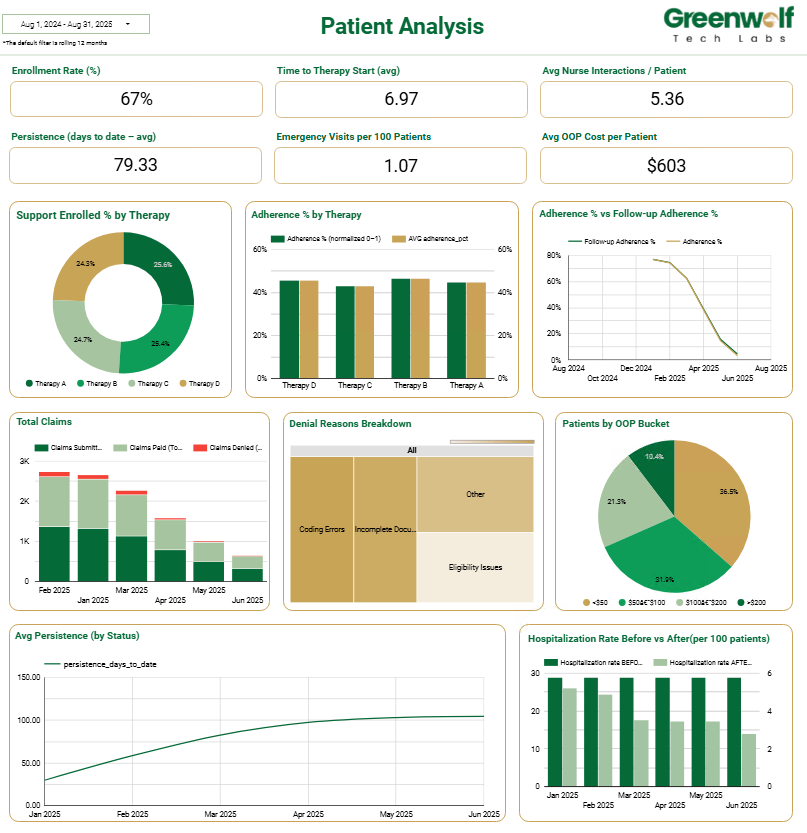
These indicators provide a true reflection of how well patient support programs are functioning.
Why Dashboards Are the Solution
Manually managing and analyzing access data is overwhelming. Teams often rely on siloed reports that fail to tell the whole story. Integrated dashboards change the game by:
- Consolidating data streams across hubs, specialty pharmacies, payers, and field teams.
- Highlighting bottlenecks in the patient journey with real-time visibility.
- Prioritizing meaningful KPIs over vanity metrics, aligning reporting with outcomes.
- Driving accountability by making it clear which teams or processes create delays.
A well designed dashboard doesn’t just report, it guides action by spotlighting the levers that improve patient outcomes.
Moving from Activity to Impact
Organizations that realign their KPIs around patient outcomes see a measurable difference: faster time to therapy, fewer abandoned prescriptions, and higher adherence rates. By shifting focus from “what looks good” to “what works,” pharma companies can ensure that every action moves the needle for patients not just the slide deck.
Challenges and Considerations
- Data dependency: AI requires accurate traffic, location, and demand data.
- Integration: Must connect seamlessly with existing fleet management systems.
- Cost of adoption: Small fleets may find initial AI setup expensive.
Final Thoughts
The misalignment of access KPIs is more than a reporting problem it’s a patient care problem. As long as organizations prioritize call counts and enrollments over real outcomes, patients will continue to face unnecessary barriers. But with automation and integrated dashboards, pharma leaders can finally measure what matters, close the gaps, and deliver on the promise of patient centric care.