

Why "where is my order?" eats your day
Order status automation answers the question every business that ships, delivers or books anything hears all day: "Where is my order?" It comes in on WhatsApp, by email, as a missed call and as a comment under a post. Each one is small, but each one makes someone stop what they are doing, find the order, open the courier site, copy a tracking number and type a reply.
On a busy day that is the same question fifty times. Replies get slower, the customer asks a second time, and the one order that really is stuck gets lost among the forty that are fine. Shops, online stores, distributors, clinics waiting on lab reports and service businesses with booked visits all live with it.
This workflow reads each question, finds the order in your own system, checks the latest courier status and replies with the status, the expected date and the tracking link. Anything late, damaged or from an upset customer goes straight to a person with the details already pulled together.
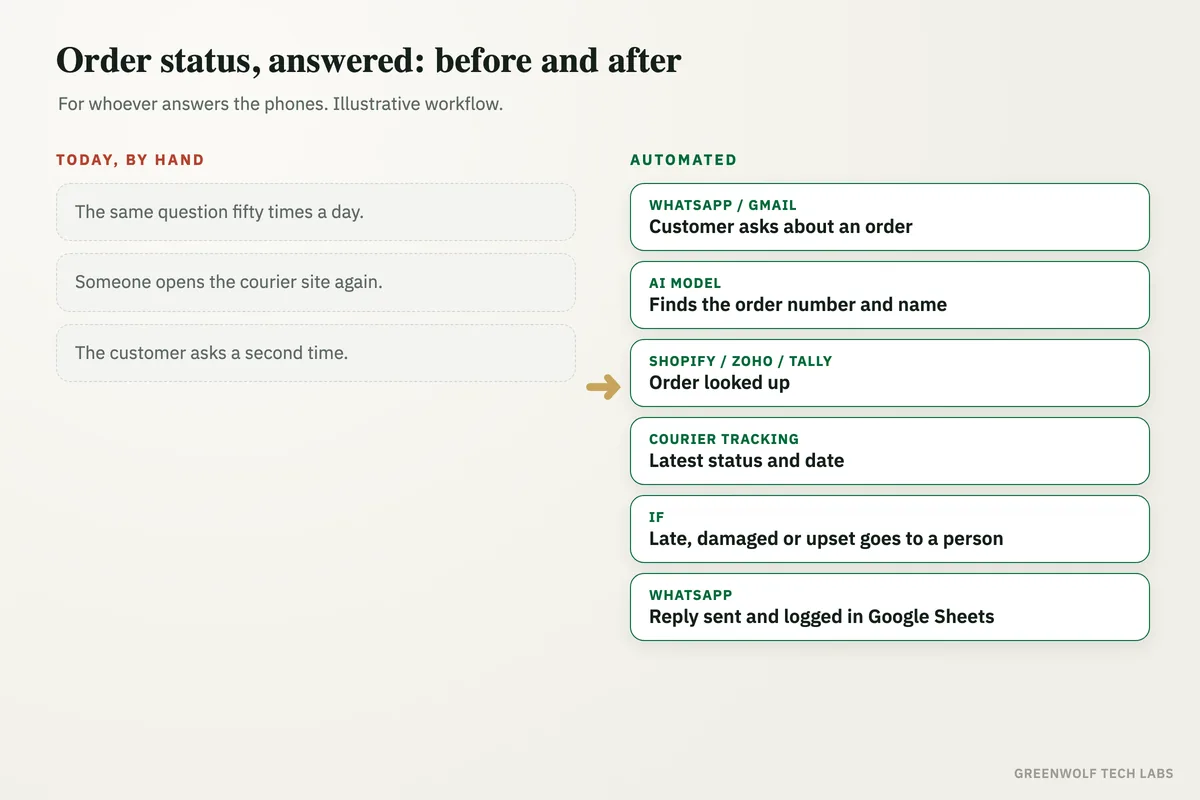
What gets automated
Reading the question
Messages on WhatsApp and email are read as they arrive. AI spots order questions in any wording and picks out the order number, name or phone number.
- Any wording
Finding the order
The order is looked up in Shopify, Zoho, Tally, QuickBooks or your order sheet, even when the customer only gives a name or the phone they ordered from.
- Order number
- Phone number
- Customer name
Checking the courier
The latest tracking status and expected date come from the courier or shipping platform, so the reply matches what the courier sees.
- Tracking status
- Expected date
- Tracking link
A clear reply
The customer gets one short message in your tone: what has happened, when it arrives and the tracking link. No forms, no waiting for office hours.
- Status
- Date
- Link
Handing over the hard ones
Late orders, damage, refunds, wrong items and upset customers go to a person, with the order, the courier status and the chat already attached.
- Late
- Damaged
- Upset
Every reply logged
Each question and answer is logged in Google Sheets or Excel, so you can see how many came in, which courier causes the most questions and what was handed over.
- Daily count
- By courier
- Handovers
How the workflow runs
WhatsApp or Gmail: the customer asks
A message arrives on the business WhatsApp number through the WhatsApp Business API (via a provider such as WATI or Twilio) or in Gmail or Outlook.
AI model: the order is identified
ChatGPT or Claude reads the message, decides whether it is about an order, and pulls out the order number, name or phone number. Other messages go to your normal inbox.
Shopify, Zoho or Tally: the order is looked up
The order is found in your store, accounting or order system, with what was ordered, when it was dispatched and which courier has it.
Courier tracking: the latest status
The current status and expected delivery date are read from the courier or shipping platform using the tracking number on the order.
If step: late, damaged or upset goes to a person
An order past its promised date, a delivery problem or an angry message is handed to your team on WhatsApp or email, with everything they need to reply.
WhatsApp: the reply goes out and is logged
Everything else gets a clear reply with status, date and tracking link, and the question and answer are logged in Google Sheets or Excel.
Who it is for
What you need to start
You keep the tools you already use: your WhatsApp business number and email, your orders in Shopify, Zoho, Tally, QuickBooks or a Google Sheet, and the courier or shipping platform you already book with. The workflow runs on n8n, Make or Zapier, an AI model such as ChatGPT or Claude reads the messages, and WhatsApp runs through the WhatsApp Business API with a provider such as WATI or Twilio.
The most important part of the build is the handover rules: what counts as late for you, which words mean a customer is upset, what the AI may say and what must always go to a person. We test the workflow on your past order questions until its replies match what your team would have sent. If your orders arrive on WhatsApp too, order processing automation can enter them for you, and shipment status updates can tell customers about delays before they ask.
A typical build is planned around your real orders and courier data, tested on past questions, and goes live over a few weeks.
Questions about order status automation
What is order status automation?
Can it answer on WhatsApp?
What if the customer does not give an order number?
Will the AI make promises we cannot keep?
Does it work with Shopify, Zoho and Tally?
How many "where is my order?" messages did your team answer today?
Book a digital audit. We will look at how order questions reach you today and show what order status automation would look like on your own orders and couriers.
Part of our Sales and Marketing Automation hub. Start with our marketing automation services.